
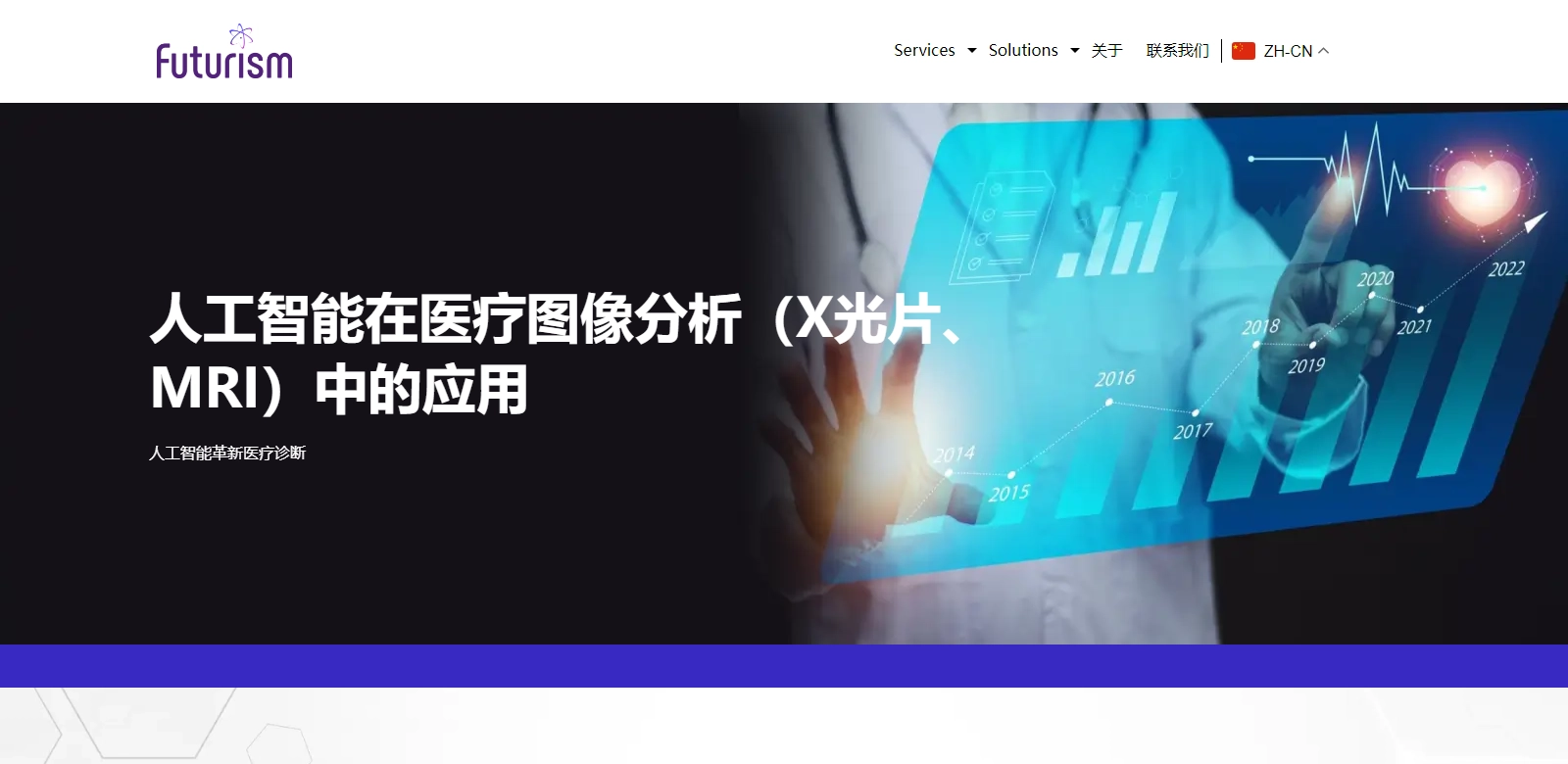
Revolutionizing Patient Care: AI in Healthcare Image Analysis
In the world of healthcare, accurate and timely diagnosis can significantly impact patient outcomes. The integration of Artificial Intelligence (AI) in healthcare image analysis has emerged as a groundbreaking solution, enabling healthcare professionals to uncover deeper insights and make faster decisions. With a focus on merging advanced technology with human expertise, AI for healthcare image analysis is designed to enhance patient care while maintaining a human touch.
Customers of AI Healthcare Solutions
Understanding the diverse array of customers who benefit from AI in healthcare image analysis is essential for recognizing its impact. This technology services various sectors, enabling tailored solutions for an array of healthcare professionals. The primary customers can be categorized as follows:
-
Radiologists: Radiologists play a pivotal role in diagnosing diseases through imaging techniques. AI tools assist them by streamlining image interpretation processes, improving accuracy, and reducing the workload. By automating routine tasks, radiologists can dedicate more time to complex cases that require in-depth analysis.
-
Hospitals and Clinics: Healthcare facilities leverage AI to optimize their diagnostic capabilities. By integrating AI into their existing systems, these institutions can enhance efficiency in image analysis, leading to faster diagnoses. This ultimately results in better patient management and satisfaction, reducing the time spent waiting for test results.
-
Medical Imaging Equipment Manufacturers: Equipment manufacturers work closely with AI developers to embed intelligent software into imaging devices. This collaboration results in advanced imaging technologies capable of identifying subtle anomalies that may be missed by the human eye, thus improving diagnostic accuracy at the point of care.
-
Healthcare IT Professionals: IT professionals implement and maintain AI systems within healthcare infrastructure. Their involvement is critical as they ensure seamless integration and optimal performance of AI tools in healthcare environments, allowing healthcare providers to focus on patient care rather than technical issues.
-
Patients: Ultimately, patients are the end beneficiaries of AI in healthcare image analysis. Improved diagnostic capabilities lead to timely treatments and better health outcomes, ensuring that patients receive the care they need when they need it.
Problems and Solution by AI in Healthcare Image Analysis
Problems Found in Traditional Imaging Processes
Despite advancements in technology, several challenges persist in traditional healthcare image analysis:
-
Inconsistent Interpretation: Different healthcare professionals may interpret images variably, leading to diagnostic discrepancies. AI reduces inconsistency by providing data-driven insights, thereby normalizing interpretations across different practitioners.
-
High Workload for Radiologists: The burgeoning volume of imaging data creates a substantial workload for radiologists. AI tools can automate routine tasks, managing the excess load and allowing radiologists to focus on critical diagnostics.
-
Delayed Diagnostics: Delays in diagnosing conditions such as tumors or fractures can result in adverse outcomes. AI facilitates rapid image analysis, expediting the diagnostic process.
-
Limited Resources in Developing Regions: Access to expert radiologists remains a challenge in many regions. AI can bridge this gap, making advanced imaging interpretations available even in resource-limited settings.
-
Increased Healthcare Costs: Inefficiencies in traditional imaging can result in extended hospital stays and increased healthcare costs. By streamlining processes, AI helps reduce these costs while enhancing patient care.
Solution by AI in Healthcare Image Analysis
AI offers innovative solutions that address these challenges by transforming image analysis into a more systematic, efficient, and accurate process. By employing algorithms that analyze vast datasets, AI can recognize patterns and anomalies in medical images with remarkable precision. This technology not only improves diagnostic accuracy but also enables predictive analytics that can identify potential health issues before they manifest clinically.
For instance, tools such as Futurism AI provide comprehensive solutions tailored for healthcare institutions. Their AI-driven diagnostic tools assist healthcare providers in achieving higher accuracy levels, leading to better clinical decisions and enhanced patient outcomes.
Use Case
-
Early Detection of Diseases: AI algorithms can analyze X-rays and MRIs to detect early signs of diseases like cancer, enabling timely interventions.
-
Automated Reporting: Automated systems can generate reports from imaging data, significantly reducing the time required for radiologists to produce results.
-
Triage in Emergency Settings: In emergency departments, AI can assist in prioritizing patients based on the severity of conditions identified through imaging.
-
Training and Education: AI can augment medical training by providing simulated case studies for radiology students, enhancing their learning curves.
-
Remote Consultations: AI tools allow specialists to analyze images from afar, facilitating consultations between primary care providers in remote locations and urban hospitals.
Top Features of AI in Healthcare Image Analysis
AI in healthcare image analysis boasts numerous features that cater to the diverse needs of healthcare professionals. Here are some notable features:
-
Deep Learning Algorithms: These algorithms excel at identifying complex patterns in imaging data, significantly enhancing diagnostic precision.
-
Workflow Integration: AI systems can seamlessly integrate with existing healthcare IT infrastructure, ensuring hassle-free adoption without disruption.
-
Real-time Analysis: AI tools offer immediate feedback on imaging data, allowing for quicker clinical decision-making and improved patient care.
-
Scalability: AI solutions are designed to scale as healthcare facilities grow, adapting to increasing workloads and expanding patient needs.
-
User-friendly Interface: Most AI tools are equipped with intuitive interfaces, simplifying training and use for all staff types, from inexperienced users to seasoned professionals.
Frequently Asked Questions with AI in Healthcare Image Analysis
-
How does AI enhance the accuracy of imaging diagnoses?
AI algorithms analyze vast datasets to learn and identify specific features associated with various medical conditions. This results in improved accuracy as systems continuously learn from new data, reducing errors that might occur due to human fatigue or oversight. -
What are the implications of AI replacing radiologists?
AI is not meant to replace radiologists but to support them. By handling routine analyses and identifying anomalies, AI allows radiologists to focus on complex cases requiring human insight and expertise. -
Is AI in healthcare image analysis reliable?
Yes, AI systems have been shown to perform exceptionally well in diagnostic tasks when validated against established benchmarks and clinical data, demonstrating reliability comparable to or exceeding that of human practitioners. -
What type of imaging data can AI analyze?
AI can analyze a variety of imaging modalities, including X-rays, MRIs, CT scans, and ultrasounds, providing a broad range of applications in medical imaging. -
How can healthcare facilities implement AI solutions?
Implementation typically involves collaborating with technology providers to integrate AI tools into existing imaging systems, followed by staff training and ongoing support to maximize effective use.