
Cognitive Search Technology: Revolutionizing Data Discovery
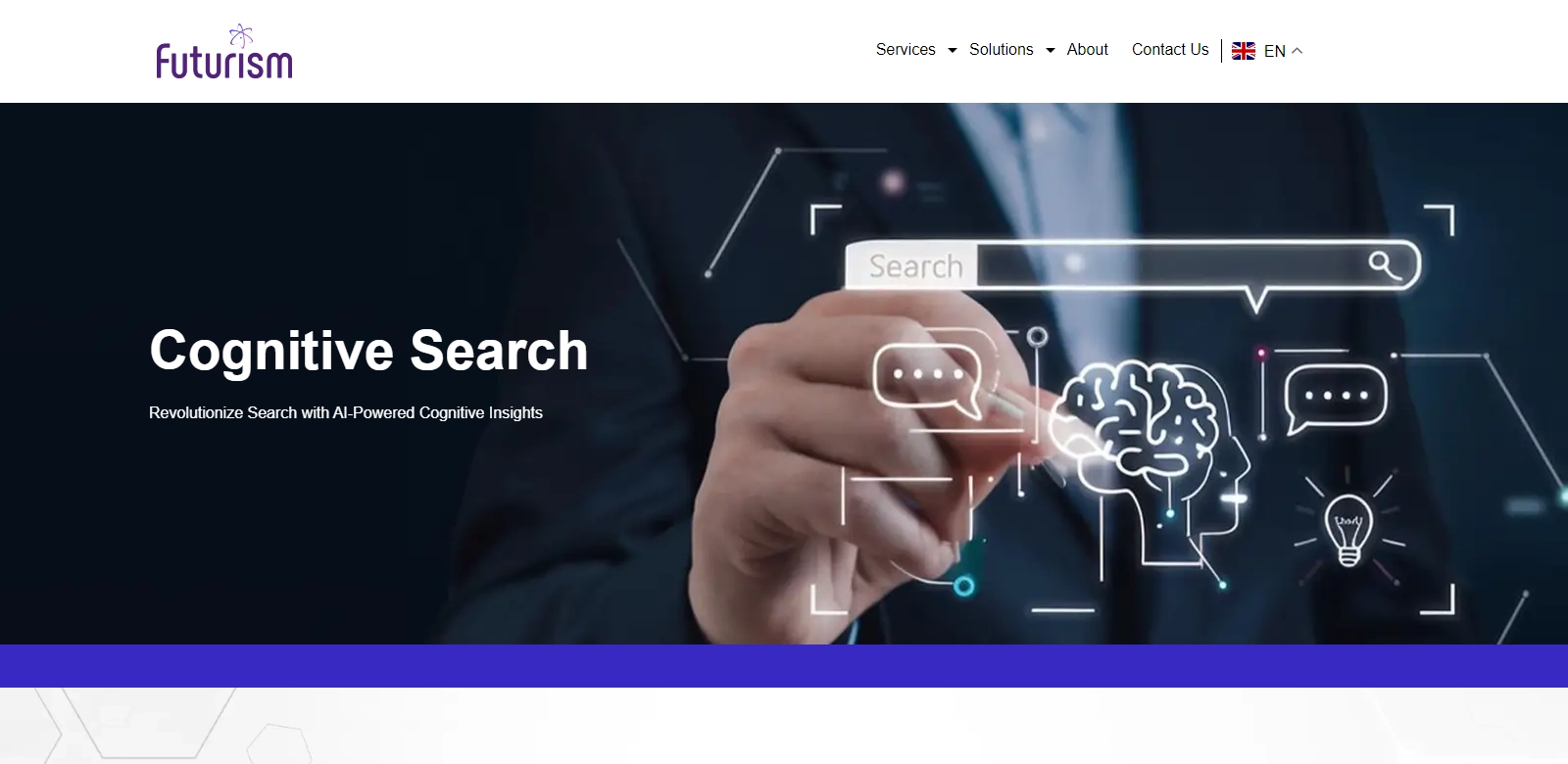
Cognitive search technology represents a significant advancement in how we interact with vast amounts of data. Unlike traditional search methods that rely primarily on keyword matching, cognitive search harnesses the power of artificial intelligence to access and interpret data with a new level of sophistication. It focuses not only on locating information but also on understanding the context, intent, and meaning of queries across diverse data sources, thereby delivering relevant insights that can transform decision-making processes. This innovative approach is becoming crucial amidst the growing complexity of data environments, ensuring organizations can find what truly matters in an efficient manner. For an in-depth exploration of this technology, consider checking out Cognitive AI Search, which highlights various applications and benefits.
Customers of Cognitive Search Technology
Cognitive Search Technology serves a myriad of sectors, each deriving unique benefits from its capabilities. By analyzing customer personas, we gain insights into who can leverage this technology most effectively.
-
Enterprise Data Analysts:
Data analysts in large corporations often grapple with vast troves of information, struggling to pinpoint key insights quickly. Cognitive search solutions can streamline their workflow by providing contextually relevant information rapidly, allowing them to focus more on analysis rather than data hunting. -
Academic Researchers:
Researchers depend on immense datasets and literature reviews for their work. Cognitive search assists in gathering and understanding the relationship between varied topics, facilitating comprehensive literature reviews and hypothesis development with enhanced precision. -
Content Managers:
For businesses managing extensive digital content, cognitive search allows content managers to deliver personalized experiences by understanding user queries contextually. This leads to improved content discoverability and engagement metrics. -
Customer Support Teams:
Customer service operations frequently rely on quick access to knowledge bases and past tickets. Cognitive search helps support agents to retrieve relevant information and solve customer issues efficiently, thereby elevating customer satisfaction levels. -
Marketing Analysts:
Marketing professionals face the challenge of sifting through numerous trends and consumer behaviors. By applying cognitive search, they can uncover valuable customer insights and optimize campaigns effectively based on contextual data analysis.
Problems and Solutions by Cognitive Search Technology
Problems Identified by Cognitive Search Technology
Cognitive search technology addresses numerous challenges faced by organizations today.
-
Information Overload:
The digital landscape is flooded with information. Traditional search systems can overwhelm users with irrelevant results that hamper productivity. -
Contextual Misunderstandings:
Users may not always utilize precise keywords. Misinterpretation of queries can lead to inaccurate information retrieval, resulting in wasted time and resources. -
Disparate Data Sources:
Many organizations manage data across various silos, making it challenging to achieve a unified view or analytics. -
User Experience Issues:
Conventional search methods can lead to frustrating user experiences due to poor relevance and a lack of personalization, affecting overall engagement. -
Slow Decision-Making:
Inefficient information retrieval processes can lead to delayed decision-making, giving competitors an edge in rapidly changing markets.
Solutions Offered by Cognitive Search Technology
Cognitive search technology brings forth several solutions to enhance information retrieval processes.
The implementation of cognitive search acts as a transformative approach by employing advanced AI algorithms that analyze and interpret data contextually. By using natural language processing (NLP), cognitive systems can grasp user intent far beyond traditional keyword searches. This enables users to receive tailored search results, improving search accuracy significantly. Furthermore, it unifies various data sources, allowing users to access a comprehensive data repository seamlessly, thereby resolving the silo issue.
By incorporating machine learning, cognitive search systems can continuously learn from user interactions. This leads to improved accuracy over time, reducing search result fatigue, and enhancing overall productivity. User experience is optimized through intuitive interfaces that leverage contextual awareness to present relevant insights, minimizing cognitive load on users. Thus, decision-making becomes faster and more informed, empowering organizations to respond to market dynamics effectively.
Use Cases
Cognitive search technology has a variety of practical applications across different fields. Here are just a few use cases demonstrating its versatility:
- Academic Research: Researchers utilize cognitive search to aggregate data from multiple journals and articles, enabling them to develop robust methodologies and foster innovative findings.
- E-commerce: By integrating cognitive search into their platforms, online retailers can provide personalized shopping experiences, leading to higher conversion rates.
- Healthcare: In the medical field, professionals can access a wealth of patient data and research instantly, allowing for timely interventions and improved patient care.
- Financial Services: Analysts can swiftly find relevant financial reports and market data, enhancing their ability to generate insightful forecasts.
- Legal Services: Lawyers can leverage cognitive search to analyze vast amounts of legal literature and precedents, improving case preparation substantially.
Top Features of Cognitive Search Technology
Cognitive search stands out not only due to its innovative nature but also because of its key features:
-
Natural Language Processing (NLP):
Cognitive search systems utilize NLP to parse user queries, providing answers that align closely with user intent. -
Contextual Understanding:
This feature enables the search to take into account the background of the user’s request, delivering more accurate results. -
Personalization Capabilities:
Cognitive search offers personalized results based on previous user behavior, making the search experience more relevant and engaging. -
Integration Across Platforms:
The ability to connect and unify data sources ensures users have seamless access to all available information, regardless of where it is stored. -
Adaptive Learning:
As users interact with the system, the search technology refines and improves its algorithms, leading to continuously better search results.
Frequently Asked Questions with Cognitive Search Technology
-
What makes cognitive search different from traditional search?
Cognitive search differentiates itself by going beyond mere keyword matching. It leverages AI to comprehend user intent and context, allowing for more relevant results. -
Can cognitive search be integrated with existing systems?
Absolutely, cognitive search can be customized to work alongside current systems, ensuring a smooth transition and integration process for organizations. -
How does cognitive search enhance user experience?
By utilizing contextual understanding and personalization, cognitive search provides users with more relevant and accurate results, significantly improving engagement. -
Is cognitive search scalable for large organizations?
Yes, cognitive search technology is designed to handle large datasets and can be scaled according to the organization's needs, ensuring consistent performance. -
What industries benefit the most from cognitive search?
Numerous industries benefit, including education, e-commerce, healthcare, finance, and legal sectors, each finding unique use cases enhancing their operations.