
Diffray: Advanced AI Code Review for Enhanced Software Quality
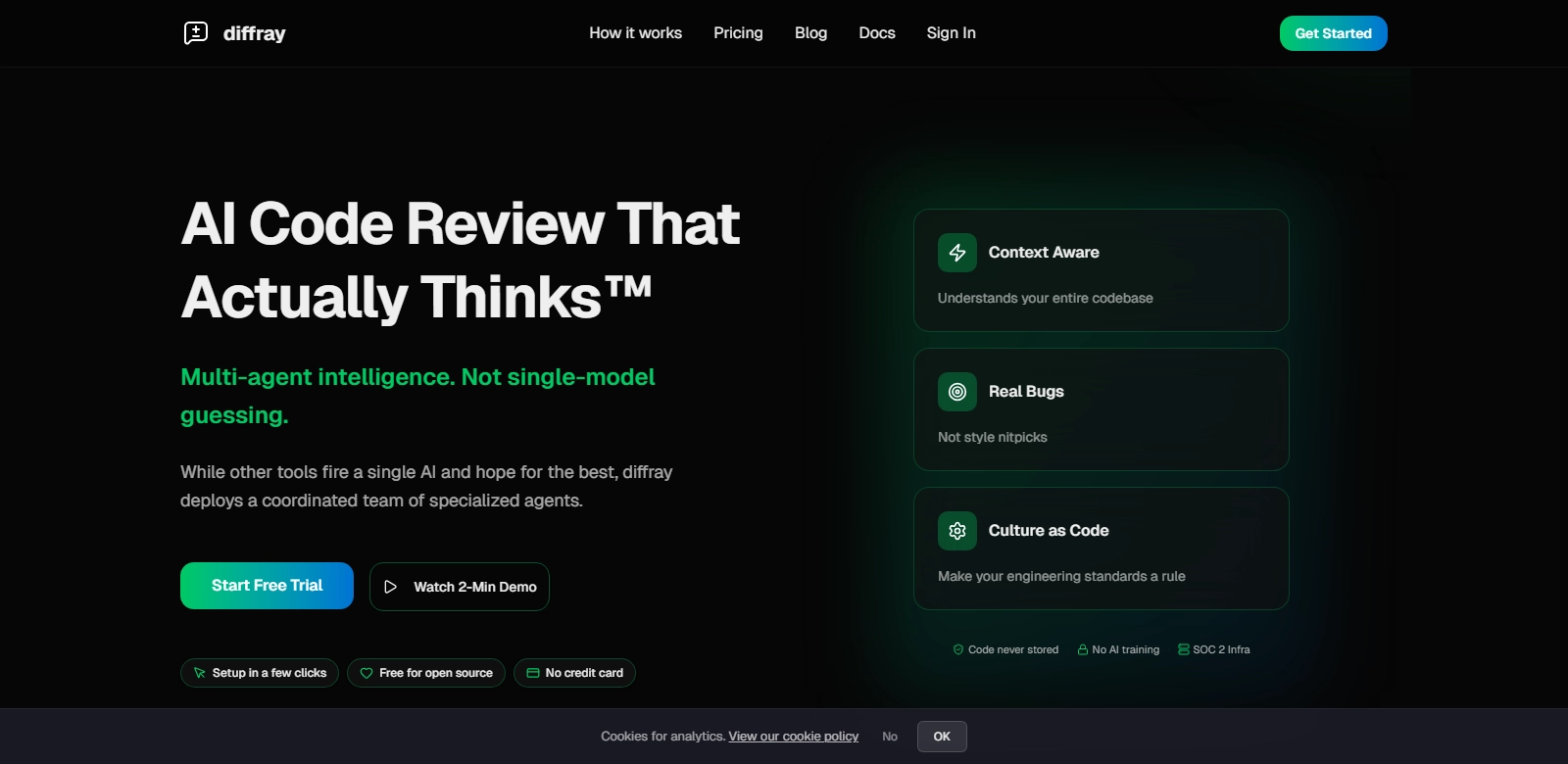
Diffray is revolutionizing the landscape of software development with its state-of-the-art multi-agent AI code review system, which is designed to spot bugs and weaknesses in code significantly better than traditional methods. By leveraging sophisticated algorithms and multiple AI agents, Diffray aims to reduce false positives by 87% and identify three times more issues than conventional code reviews. This profound advancement allows developers to focus more on crafting high-quality software while ensuring that their code undergoes rigorous scrutiny.
With its capability to streamline the quality assurance process, Diffray is gaining traction among software teams striving for excellence, especially in the realms of open-source projects, where its service is offered for free. As software complexity increases, the need for reliable and efficient code review systems becomes paramount. Diffray meets this demand head-on, providing features that cater to the distinct needs of various software developers.
Customers of Diffray
Understanding the diverse customer base that utilizes Diffray's services is essential in appreciating the value it brings to the coding community. Below are profiles of key customer segments that can benefit from Diffray’s advanced capabilities:
-
Small to Medium Enterprises (SMEs):
For SMEs, limited resources often translate to the necessity for robust yet budget-friendly solutions. Diffray provides these businesses with an affordable means to enhance their code quality, enabling them to remain competitive without overwhelming their budgets. -
Open Source Projects:
Open source communities thrive on collaboration, and at times, this can lead to inconsistencies in code quality. With Diffray’s free services for open-source projects, developers can utilize advanced AI to ensure their contributions meet high standards, fostering greater confidence in community-led initiatives. -
Freelancers and Independent Developers:
Freelancers take on various projects and can find themselves pressed for time. Diffray offers them a way to improve their coding standards efficiently, allowing them to deliver quality work promptly, which enhances their reputation and client satisfaction. -
Large Enterprises:
Large organizations, with extensive codebases, require a robust system to maintain code integrity. Diffray caters to these needs by implementing its multi-agent review process, ensuring that large teams can manage their complexities effectively. -
Educational Institutions:
For institutions teaching software development, integrating Diffray into curricula allows students to engage with real-world tools that emphasize the importance of quality assurance in coding practices.
Problems and Solution by Diffray
The modern software development landscape presents unique challenges, particularly concerning code quality management. Differences in team expertise, evolving coding standards, and the sheer volume of code can exacerbate common issues.
Problems Diffray Found
-
Inconsistent Code Quality:
Teams often struggle with maintaining consistent coding standards, leading to various bugs and inefficiencies across projects. This inconsistency can stem from diverse personal styles and best practices among developers. -
Time-Consuming Code Reviews:
Traditional code review methods can be labor-intensive, often causing delays in project timelines due to the manual nature of feedback and corrections. -
High False Positive Rates:
Earlier code review tools are notorious for generating false positives, which can drain developer morale and lead to wasted time on issues that are not actually problematic. -
Overlooked Critical Issues:
Manual reviews may miss critical bugs that could lead to vulnerabilities or usage issues, increasing the risk for developers and users alike. -
Scalability Concerns:
As projects grow, maintaining a viable review process becomes challenging, thus necessitating the need for automated and scalable solutions.
Solution by Diffray
Diffray addresses these issues through its innovative approach to AI code review. By employing multiple agents that analyze code simultaneously, the system can uncover deeper insights and offer more accurate feedback than traditional single-agent systems. This multi-faceted analysis helps reduce false positives and improves overall code quality significantly. Furthermore, the speed of AI reviews allows teams to make adjustments and fixes rapidly, resulting in accelerated development cycles.
The solution is robust enough to handle various coding standards and styles, so whether a team is working in Python, JavaScript, or any other programming language, Diffray can help maintain consistency. The integration is seamless, making it easy for developers to adopt and incorporate within their existing workflows, thus eliminating friction and encouraging high standards.
Use Case
Diffray’s capabilities extend well beyond basic code review; it can be employed in multiple scenarios across different developments stages. For instance, in Agile development, teams can incorporate Diffray to conduct real-time reviews as code is pushed, ensuring issues are caught before they propagate. Additionally, in continuous integration/continuous deployment (CI/CD) environments, Diffray can serve as a gatekeeper for quality, automating checks that stave off regressions and potential issues before they impact the end-user.
Lastly, for educational purposes, professors can use Diffray to assess student submissions, providing immediate feedback based on established industry standards—a feature that not only benefits students but enriches the instructional process.
Top Features of Diffray
Diffray offers an impressive suite of features that empower developers and organizations to achieve coding excellence. Some of the top features include:
-
Multi-Agent Analysis:
This feature allows multiple AI agents to review code simultaneously, which significantly improves detection rates for bugs and vulnerabilities. -
Detailed Reporting:
Differing from standard tools that give surface-level feedback, Diffray provides comprehensive reports that outline not only detected issues but also suggested improvements, enhancing the educational aspect of the review. -
Integration Capabilities:
Diffray seamlessly integrates with various popular development tools and platforms, allowing teams to incorporate advanced review capabilities without major disruptions. -
User-Friendly Interface:
The platform is designed to be intuitive, making it accessible for users with varying levels of technical proficiency to navigate the reviews easily. -
Real-Time Feedback:
Real-time analysis means developers can receive immediate insights as they code, which encourages best practices and timely corrections.
Frequently Asked Questions with Diffray
-
What programming languages does Diffray support?
Diffray is versatile and supports a wide range of programming languages, making it suitable for diverse projects and teams. Users can expect equally effective reviews whether they're coding in Python, Java, or JavaScript, ensuring that all developers have access to the same high-quality feedback mechanisms. -
How does Diffray reduce false positives during code reviews?
Through its multi-agent architecture, Diffray utilizes numerous AI algorithms that cross-reference findings, thereby reducing the likelihood of false positives. Each agent brings its unique perspective, allowing for a more nuanced analysis of the code. -
Is Diffray appropriate for large teams?
Yes, Diffray is specifically designed to scale with growing teams. Its features are tailored to manage complexities associated with larger codebases while ensuring consistent quality reviews across all contributors. -
Can Diffray be integrated into existing workflows?
Absolutely. Diffray is built with integration in mind, allowing companies to adopt its features without requiring extensive restructuring of their current development workflows, thus smoothing the transition and maximizing benefits. -
What are the costs associated with using Diffray?
Diffray offers a free version for open-source projects, while tailored pricing models are available for commercial enterprises, ensuring users receive excellent return on investment relative to their specific needs.