
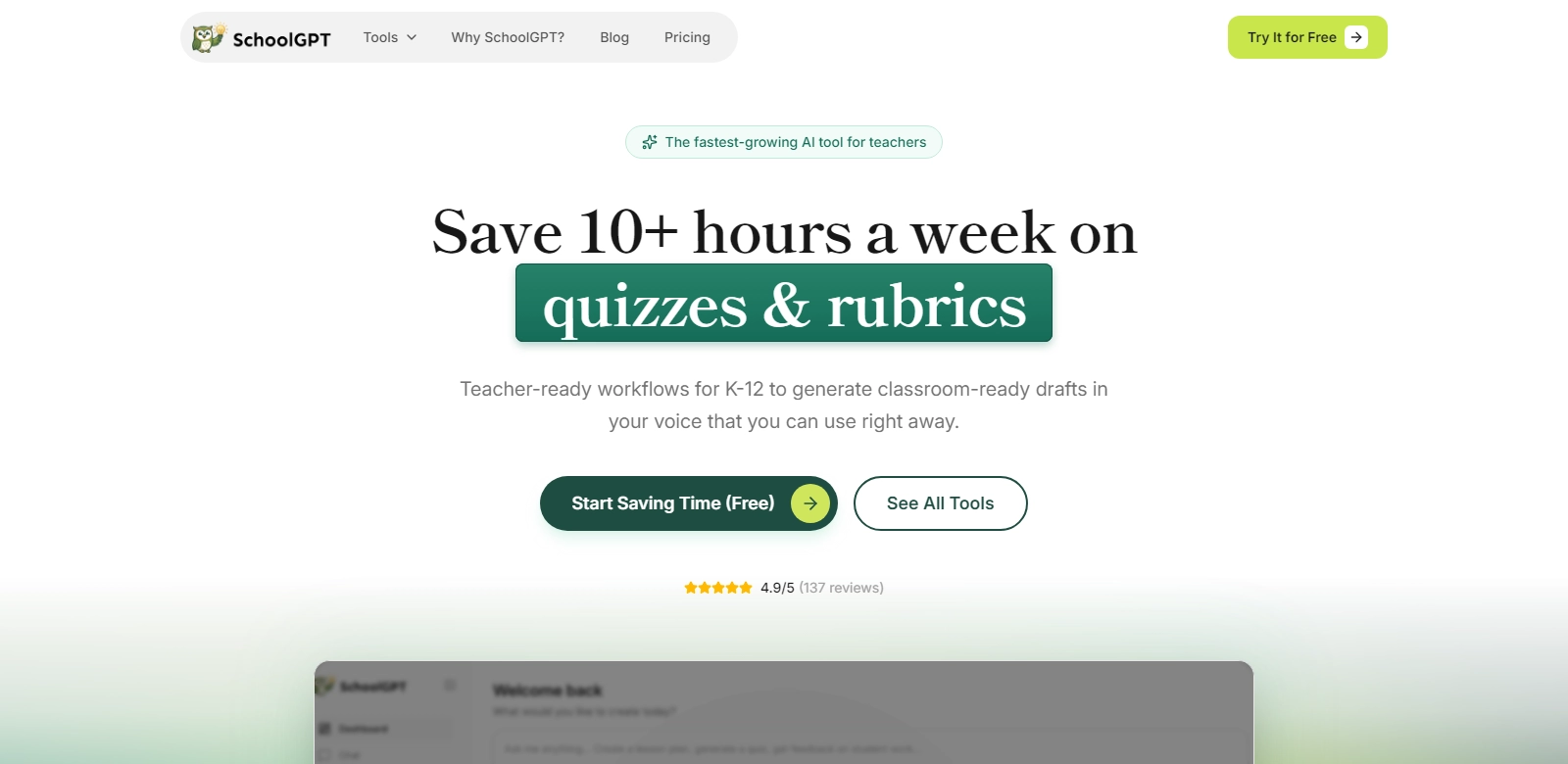
SchoolGPT: Revolutionizing K-12 Education with AI
SchoolGPT is an innovative AI teaching assistant designed specifically for K-12 educators. As the landscape of education continually evolves, the need for efficient tools to support teachers has never been more pressing. SchoolGPT emerges as a critical resource, offering solutions tailored to meet the diverse needs of educators across the globe. With over 60 customizable templates and trusted by more than 10,000 educators, this AI assistant significantly reduces the time spent on lesson planning, grading, and communication with parents, allowing teachers to focus more on what truly matters: enhancing student learning experiences. For more insights, visit SchoolGPT.
Customers of SchoolGPT
Understanding who benefits from SchoolGPT is essential to grasping the full impact of its offerings. The users are mainly K-12 educators facing common challenges in educational settings. Here are the primary customer personas:
-
Classroom Teachers:
Classroom teachers are at the core of K-12 education, juggling curricula, student evaluations, and administrative tasks. SchoolGPT alleviates the burden of lesson planning and grading by providing adaptable materials that align with learning standards. The integration of AI allows teachers to focus more on personalization and student engagement, rather than being encumbered by paperwork. -
Special Education Professionals:
In a diverse classroom environment, special education professionals require specific resources to cater to various learning needs. SchoolGPT offers templates that can be tailored to individual education plans (IEPs), ensuring that all students receive appropriate accommodations and support. The flexibility of AI enables these educators to create customized resources efficiently. -
Administrators:
School leaders need to ensure educators are equipped to provide high-quality instruction. By utilizing SchoolGPT, administrators can facilitate the development of consistent instructional materials across various grade levels and subject matters, promoting equity in education. This fosters a collaborative environment where teachers can share resources seamlessly. -
Parents:
Parents are increasingly involved in their children’s education, wanting to support their learning at home. SchoolGPT enables teachers to easily communicate assignments and progress reports to parents, enhancing the home-school connection. The AI tools also provide insights into student learning, making it easier for parents to identify areas where assistance is needed. -
Education Researchers:
With the growing emphasis on data in education, researchers require access to vast amounts of instructional data. SchoolGPT not only assists teachers in creating assignments but also gathers anonymous usage data that can be useful for educational research. This data helps in analyzing trends and efficacy of instructional practices in real-time.
Problems and Solution by SchoolGPT
In the realm of education, several significant problems hinder effective teaching and learning. SchoolGPT addresses these issues with smart solutions tailored for educators.
Problems SchoolGPT Found
-
Time Management:
Teachers spend a substantial amount of time on lesson planning and administrative tasks, detracting from actual teaching. This time scarcity can lead to burnout and reduced instructional quality. -
Resource Accessibility:
Many teachers struggle to find high-quality, relevant teaching resources that align with their specific curriculum needs. This can result in wasted time searching for materials. -
Communication Barriers:
Effective communication between teachers and parents is critical yet often lacks clarity. Teachers might find it challenging to keep parents informed about their children's progress and upcoming assignments. -
Diverse Learning Needs:
In classrooms today, students have diverse backgrounds and learning needs, making it challenging for teachers to cater to each learner effectively. Customizing lessons for each student is both labor-intensive and complex. -
Data Overload:
The sheer volume of student performance data can overwhelm educators, leaving them uncertain about how to leverage this information to improve teaching methods.
Solution by SchoolGPT
SchoolGPT tackles these issues head-on with a suite of solutions:
-
Integrated Planning Tools:
The platform offers a comprehensive set of tools that streamline lesson planning. Educators can access a variety of templates that are easy to customize, saving hours of time each week. By automating administrative tasks, teachers can reinvest their time back into the classroom, focusing on student engagement and instruction. -
Curated Resource Library:
SchoolGPT has a robust library of pedagogically sound resources tailored to diverse instructional needs. By providing teachers with high-quality materials aligned with educational standards, the platform addresses the resource accessibility issue directly, allowing for a more organized and efficient preparation process. -
Enhanced Communication Features:
The platform includes features designed to facilitate communication between teachers and parents. Automated updates and progress tracking tools ensure parents are kept informed about their children’s performance and upcoming academic requirements. -
Differentiated Instruction Support:
SchoolGPT’s templates facilitate the creation of differentiated lesson plans that cater to various students’ learning needs, whether through visual aids for visual learners or modified content for students requiring special accommodations. -
Analytics and Reporting:
With built-in analytics, SchoolGPT empowers educators to interpret data more effectively, identifying trends and areas in need of intervention, which can inform instructional practices in meaningful ways.
Use Case
SchoolGPT's practical applications are vast. In one scenario, a high school teacher can utilize predetermined templates to create a week's worth of assignments in just a few hours, leaving ample time for student interaction. Similarly, a middle school special education teacher can adapt lessons specifically for students with IEPs in a fraction of the time it would traditionally take.
Furthermore, a parent can interact with the platform to better understand their child's assignments and areas of improvement, while an administrator can analyze aggregated student performance data to spot trends across classrooms.
Top Features of SchoolGPT
SchoolGPT is equipped with several top-notch features designed to enhance the teaching and learning experience:
-
Customizable Templates: Easily adapt hundreds of template resources to align with specific curricular needs.
-
Integrated Analytics: Access performance analytics to gain insights that inform teaching practices.
-
Parent Communication Tools: Facilitate clearer communication between schools and families, fostering a collaborative educational environment.
-
Collaborative Features: Encourage resource sharing among educators, promoting collaboration and continuity in lesson planning.
-
Multi-Device Compatibility: Access the platform on various devices, ensuring that educators can utilize it any time, anywhere.
Frequently Asked Questions with SchoolGPT
-
How does SchoolGPT reduce lesson planning time?
By providing a catalog of educational templates and resources, SchoolGPT allows teachers to tailor and deploy lesson plans efficiently. Educators can seamlessly customize templates, making it unnecessary to start from scratch, which significantly cuts down planning time. -
Can SchoolGPT support special education needs?
Absolutely. SchoolGPT is designed with inclusivity in mind, offering specific tools and templates that support special education requirements, thus enabling educators to create equitable learning opportunities for all students. -
What types of resources are available through SchoolGPT?
The platform features a rich repository of instructional materials, including quizzes, lesson plans, and project templates that adhere to various educational standards. -
How does the platform ensure the quality of its resources?
SchoolGPT continuously curates its library, utilizing feedback from experienced educators to ascertain the relevance and effectiveness of all resources offered. -
Is the platform suitable for all educational levels?
Yes, SchoolGPT caters to a broad audience within the K-12 spectrum, including elementary, middle, and high school educators, adapting to their distinct instructional needs.