
Futurism AI: Deep Learning for Better Predictions
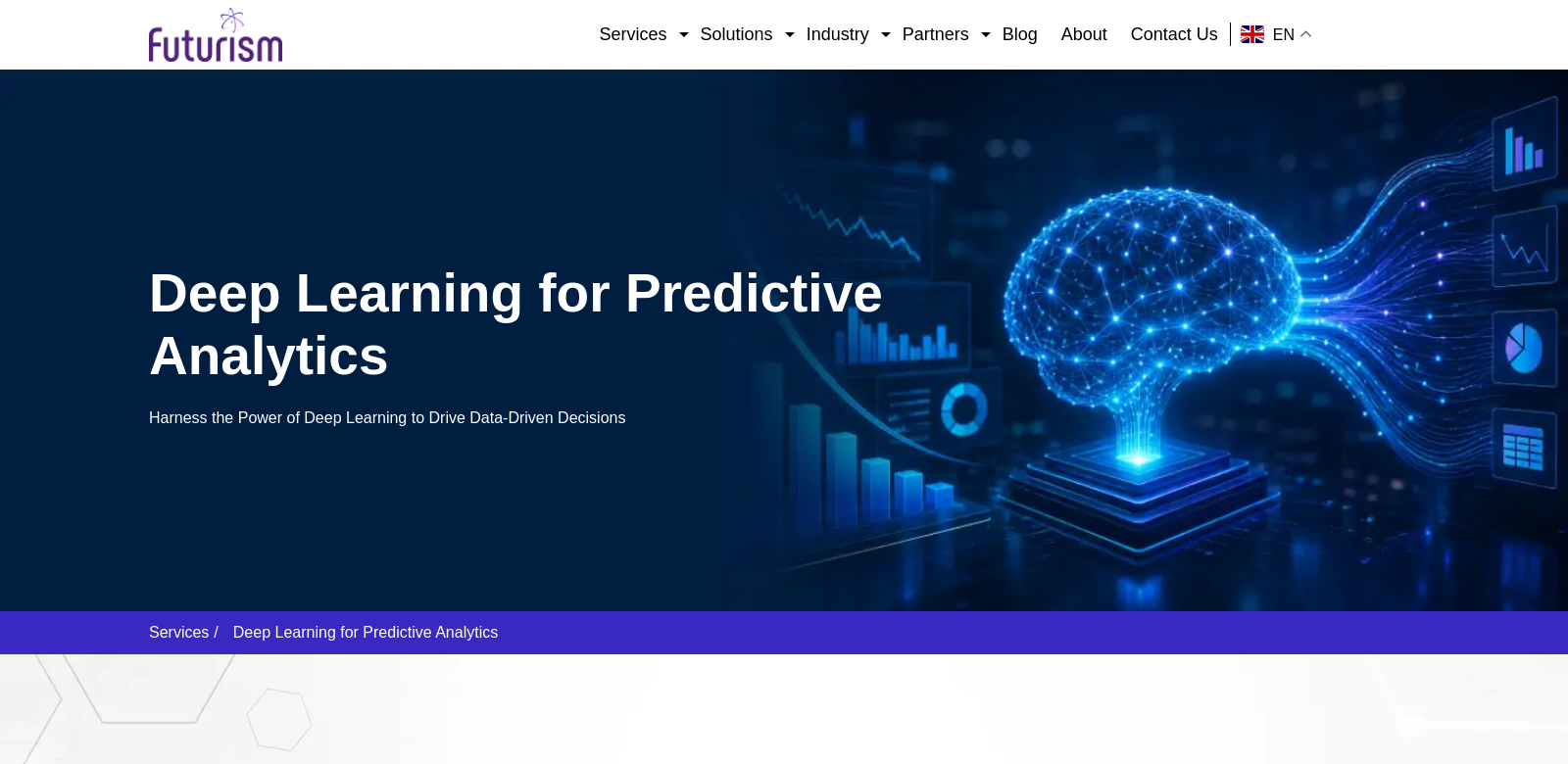
Everyone's swimming in data these days, and companies are desperate to make sense of it. That's where deep learning comes in – it's a type of AI that tries to think like a human brain, but way faster. Futurism AI builds deep learning tools specifically for predictive analytics. We help businesses actually see what's coming: forecast trends, fine-tune their operations, and make decisions based on solid data, not guesswork.
Predictive analytics isn't just a buzzword; it's how smart businesses get ahead. It lets them spot market shifts and customer habits before they happen. This means they can jump on new opportunities and dodge potential problems. Futurism AI uses deep learning to make those predictions incredibly precise and trustworthy – no more guessing games.
Who Uses Futurism AI?
We work with all sorts of businesses, because everyone needs better predictions. Each industry has its own challenges, but they all get a real edge from our tech.
-
Retail: Retailers use deep learning to predict what customers will buy and when. This means they can keep just the right amount of stock, cut down on waste, and make sure popular items are always on the shelves. Happy customers, healthier bottom line.
-
Finance: Banks and other financial groups use our predictions to spot risky loans or assess investment dangers. Knowing this upfront helps them make smarter choices, protect their money, and stay profitable.
-
Healthcare: Hospitals predict patient admissions and manage their resources better. This means smoother operations, less stress for staff, and ultimately, better care for patients. No more scrambling for beds or supplies.
-
Manufacturing: Factories use predictive analytics for maintenance and quality control. They can foresee when a machine might break down, schedule repairs before it happens, and keep production running smoothly with fewer defects.
-
Insurance: Insurers rely on deep learning to sift through claims data and flag potential fraud. This sharpens their risk assessment, leading to fairer pricing and more accurate underwriting.
The Problems We Solve (and How We Do It)
Every business hits roadblocks. Here are the big ones we see, and how Futurism AI steps in.
Common Headaches for Businesses
-
Too Much Data, Not Enough Insight: Companies are drowning in data, but can't actually use it to make smart moves. It's just noise without the right tools.
-
Bad Predictions: Old-school forecasting often misses the mark. It's based on outdated info or models too simple to catch real-world complexities, leading to costly mistakes.
-
Wasted Resources: Businesses struggle to put their people and money where they're most needed. This slows everything down and leaves customers unhappy.
-
Blind Spots for Risk: It's tough to truly understand risks when your data is messy or your analysis tools are weak. This leaves companies vulnerable.
-
Slow to React: Markets move fast. If your methods are stuck in the past, you'll miss opportunities and fall behind.
How Futurism AI Fixes Them
Futurism AI tackles these problems head-on with our deep learning tools. We use powerful models to chew through huge amounts of data, pulling out the key insights businesses need to make smart choices. Our tech does everything from predicting future trends to spotting weird anomalies, giving companies a real edge over their rivals.
And you don't need to be a data scientist to use it. Our platform is designed to be straightforward, so anyone can get valuable insights without a ton of technical know-how. Plus, our models aren't static; they learn and adapt quickly as things change, keeping your predictions sharp.
Real-World Examples
Imagine an online store using Futurism AI to predict demand. We look at past sales, what customers usually do, and even things like seasonal trends. This lets them nail their inventory levels – no more piles of unsold goods, and definitely no 'out of stock' messages for popular items. That means more sales and happier customers.
Or take a bank. With Futurism AI, they can dig into loan applicants' behavior and predict who's likely to default. Credit officers then make smarter decisions, cutting down on bad loans and focusing on the ones that actually make money.
What Futurism AI Does Best
Here's what makes Futurism AI stand out:
-
Connects to Your Data: We plug right into your existing data systems. This gives you a complete picture of your business, not just isolated bits and pieces.
-
Grows with You: Whether you're a small startup or a huge enterprise, our solutions fit. You get powerful predictions no matter your size or industry.
-
Instant Insights: Get predictions as things happen. This means you can react immediately to market shifts or customer needs, not days later.
-
Easy to Use: Our platform is designed so anyone can get valuable insights. You spend your time understanding the data, not wrestling with complicated software.
-
Always Getting Smarter: Our models constantly learn from new data. The more you use them, the better and more accurate your predictions become.
Your Questions, Answered
-
Who can use Futurism AI's prediction tools?
Honestly, almost any business that deals with data. We work with retailers, banks, hospitals, manufacturers, insurers – you name it. If you've got data, we can help you make sense of it. -
How accurate are your predictions?
We train our models constantly on all sorts of data. They're built with smart algorithms that learn and adjust to new patterns, so you get predictions you can really trust. -
Do I need to be a tech expert to use this?
Nope! We built the platform to be super easy to use. You don't need a technical background to get valuable insights and make it work for you. -
How fast will I see results?
It depends on what you're trying to predict, but many of our clients see big jumps in forecasting accuracy just weeks after they start using our tech. -
Will Futurism AI work with my current software?
Absolutely. It's designed to plug right into your existing systems, making your workflow smoother and giving you a complete picture without any hassle.