
Market Ontology: A New Way to Understand Markets
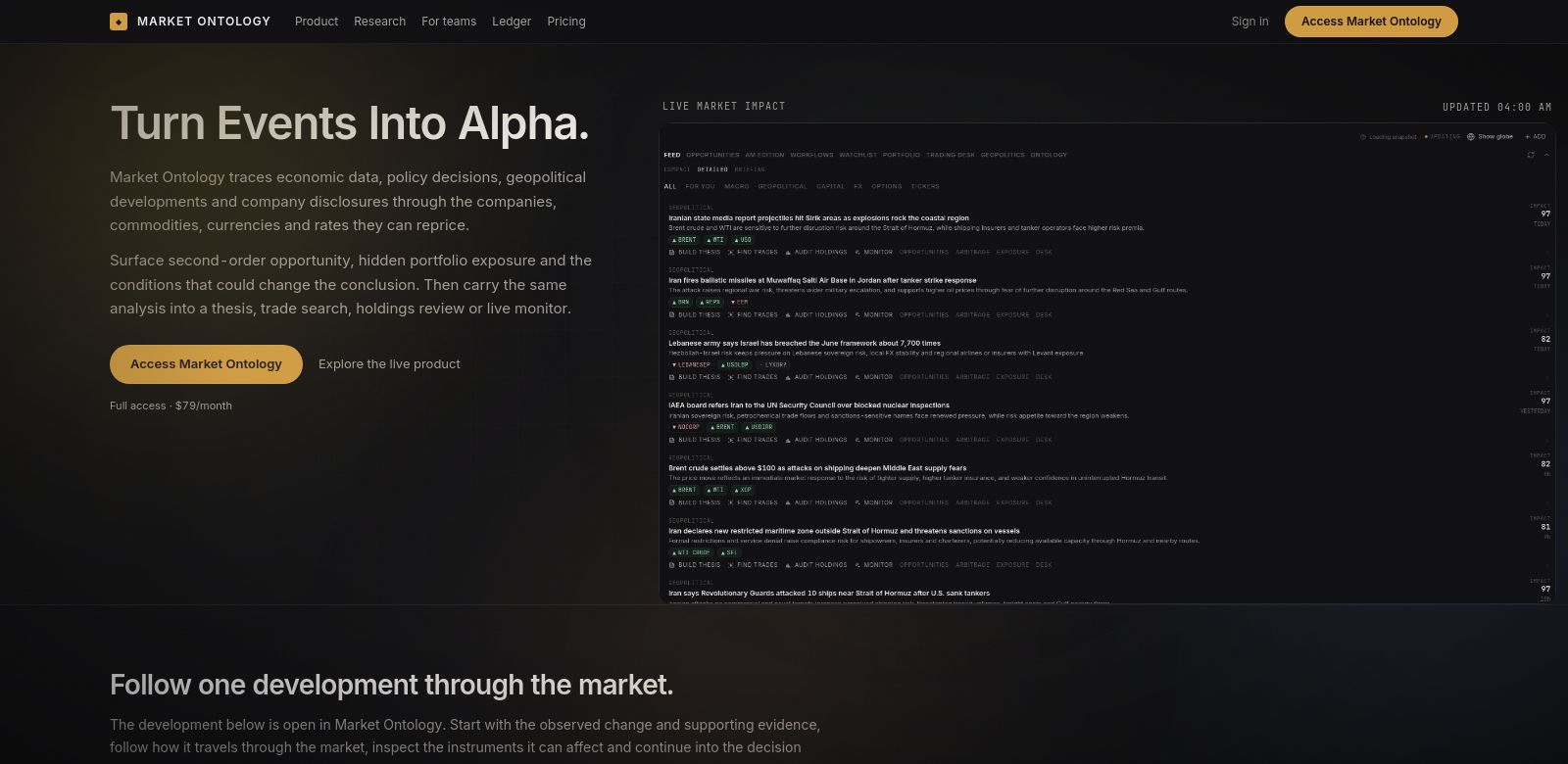
Market Ontology changes how we look at market intelligence. It connects big-picture economic trends, policy shifts, global events, and company news directly to financial assets, how things are valued, portfolios, and trading strategies. This tool helps investors and analysts make smarter choices, cut down on risk, and improve their trading. By pulling together all the different pieces that move the market, Market Ontology gives you a full picture of what drives asset prices.
Who Uses Market Ontology?
Market Ontology helps many different people in finance. Each group gets something unique from what it offers:
-
Investment Firms: Firms that use market intelligence can spot trends and predict asset moves. Market Ontology's data gives them insights that shape their portfolio strategies and investment picks, leading to better returns.
-
Traders: If you need fast access to current market conditions and what's coming next, Market Ontology is incredibly useful. It helps you make quick decisions, which is key to jumping on fleeting market opportunities.
-
Corporate Strategists: For corporate strategists, knowing the economic landscape is vital for good business decisions. Market Ontology gives these professionals the insights they need to match company plans with current economic factors.
-
Policy Analysts: Analysts in government and non-government groups get a clear view of how policy changes hit the market. Market Ontology helps them figure out potential impacts, making their economic models and forecasts more accurate.
-
Academics and Researchers: For those in universities, Market Ontology is a rich source for research. It offers huge datasets and analytical tools that make deep dives into market behaviors and trends possible. This makes it invaluable for anyone working on scholarly papers or policy development.
Problems Market Ontology Solves
In the complex world of finance, bad or incomplete data can lead to expensive mistakes. Market Ontology tackles several big issues financial professionals face every day.
Problems We Found
-
Data Silos: Financial pros often struggle with data scattered everywhere, making it hard to put information together effectively.
-
Slow Reaction Time: In fast markets, not having data quickly means you can't make decisions fast enough and miss out on chances.
-
Hard to Connect Events: It's tough to see how different economic and global events link up, which makes accurate forecasting difficult.
-
Misaligned Strategies: Companies might make business plans that don't fit the market because they lack a full view of the landscape.
How Market Ontology Helps
Market Ontology offers strong solutions to these problems with its all-in-one approach. By gathering huge amounts of data on all sorts of influencing factors, it breaks down the walls that traditionally separate information. The platform gives you real-time updates and insights, so you can react fast to changing market conditions. Plus, its advanced analytics help you understand complex connections between events better, leading to smarter forecasts.
Market Ontology's comprehensive nature also helps corporate strategists align their business models with the economic landscape. This ensures decisions are backed by real data. The result is a more unified strategy that holds up against market changes.
A Real-World Example
Imagine an investment firm trying to navigate the uncertainty from recent global events. With Market Ontology, they can see how these events impact asset prices across different markets. They can then adjust their portfolio, reducing risks while grabbing profitable opportunities. By combining historical data with current trends, they can predict potential market shifts with much greater accuracy, ultimately leading to better financial results.
Top Features of Market Ontology
Here's what Market Ontology does best:
-
All-in-One Data Integration: The platform pulls together many different data sources, giving you a complete picture of what influences the market.
-
Real-Time Updates: You get insights into key market events as they happen, letting you make quick decisions.
-
Advanced Analytical Tools: Smart algorithms help you find meaningful connections and make accurate predictions.
-
Easy-to-Use Interface: Designed to be simple, the platform makes navigating complex data straightforward for everyone, from analysts to executives.
-
Rich Resource Library: Market Ontology offers a library of resources, including articles, case studies, and best practices, to help you understand market dynamics more deeply.
Common Questions About Market Ontology
-
What kind of data does Market Ontology collect? Market Ontology brings in data from many trusted sources, like economic indicators, policy changes, global events, and company performance metrics, to give you a full market overview.
-
How does Market Ontology help traders make better decisions? Traders get real-time updates and predictive analytics that let them react quickly to market movements, helping them profit from short-term opportunities.
-
Can Market Ontology help businesses with long-term strategy? Yes, the insights it provides can help businesses match their long-term plans with economic trends, ensuring they stay competitive even when markets are volatile.
-
Is Market Ontology good for smaller firms? The platform offers flexible solutions that can be customized for businesses of all sizes, including smaller firms looking to boost their market intelligence.
-
What kind of support does Market Ontology offer new users? Market Ontology provides full onboarding support, including tutorials, customer service help, and plenty of resources to help new users get the most out of the platform.
For more information, visit Market Ontology.