
The OTP Commitment Framework: Real Accountability for Real Teams
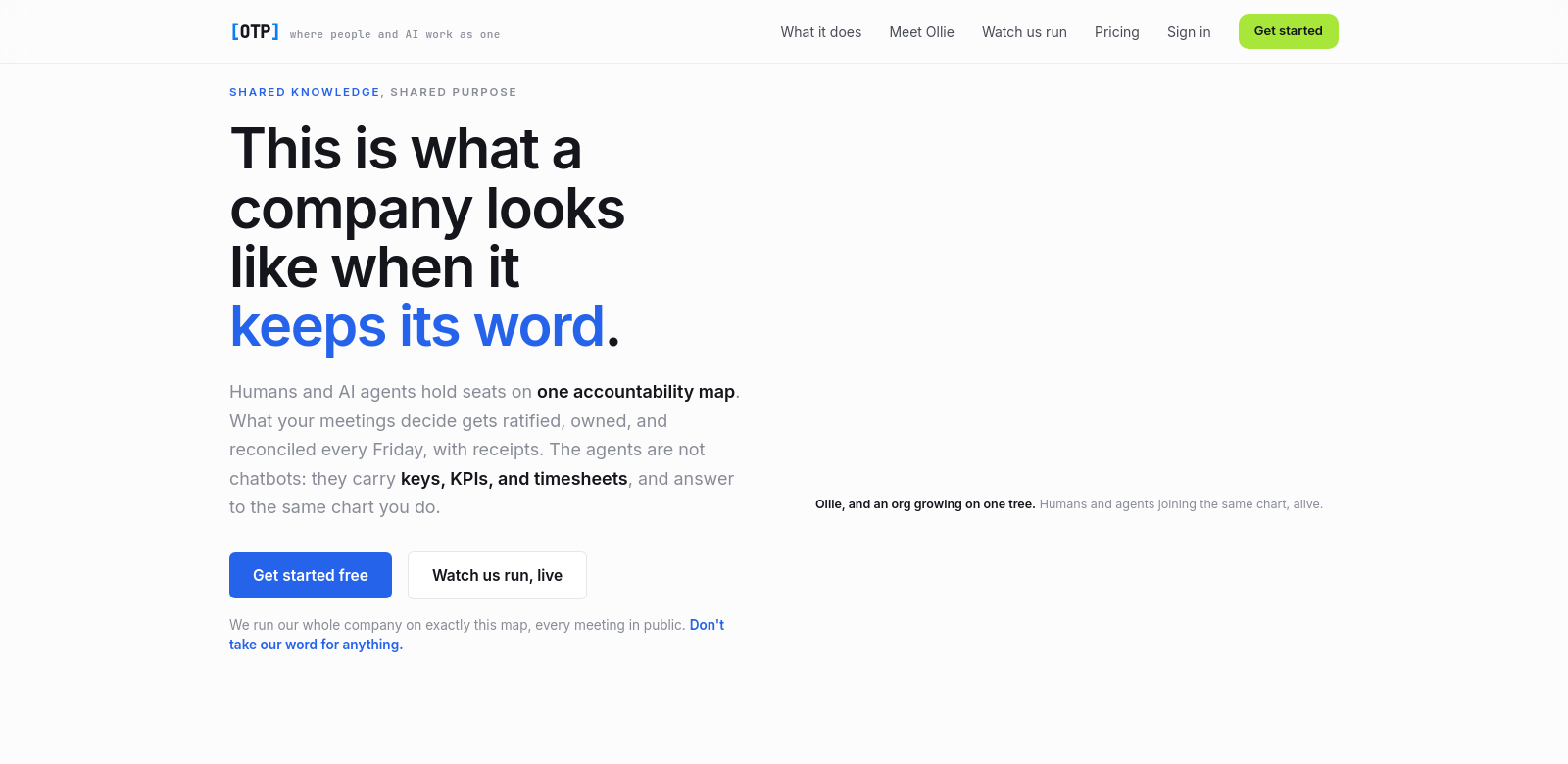
Let's face it: keeping everyone accountable, especially when humans and AI work together, is tough. OTP aims to fix that. It offers a clear, auditable map of commitments that actually gets people to take ownership. Every week, commitments are checked off, and progress is logged. This means everyone can see what's happening, building trust and making OTP essential for how businesses operate today.
Who Uses OTP?
OTP helps all sorts of clients, from big companies to small startups. They all have different needs, but they all get a lot out of OTP's accountability system. Here's who benefits most:
-
Corporate Enterprises: Big companies often struggle to keep departments accountable to each other. OTP's commitment map makes tracking simpler and helps teams work together better. It means project milestones get hit, and performance stays consistent.
-
Startups and Small Businesses: Entrepreneurs wear many hats. OTP helps startups manage commitments to investors and partners, building trust from day one. This system lets them focus on growing, not on fixing miscommunications or lost tasks.
-
Project Managers: Project managers live and die by deadlines and stakeholder expectations. OTP gives them a solid way to assign commitments clearly. This makes tasks run smoother, keeps stakeholders in the loop, and encourages team members to take responsibility.
-
Nonprofit Organizations: Nonprofits often have tight budgets. OTP shows exactly where commitments stand, helping them use funds and resources effectively. This means they can spend more time on their mission and less on paperwork.
-
Educational Institutions: Schools and universities can use OTP to boost accountability for both students and faculty. It offers a way to track commitments for projects and collaborations, which can improve learning and help students develop responsibility for their future careers.
Problems We Solve
We've all seen how a lack of accountability can derail projects and teams. OTP tackles these common problems head-on.
Problems OTP Found
-
Who's doing what?: It's easy for organizations to lose track of who's responsible for what, leading to confusion and missed deadlines. OTP gives you one clear map of all commitments.
-
Things get lost in translation: Poorly recorded or communicated commitments cause misunderstandings that can sink a project. OTP makes sure every commitment is confirmed and documented.
-
Nobody owns it: Without a clear system, people can check out. OTP assigns every commitment to a specific person, so everyone knows who's on the hook.
-
Hard to see progress: It's tough to know where things stand. OTP's weekly check-ins let everyone see progress and spot problems early, so you can fix them before they blow up.
How OTP Solves Them
OTP changes how accountability works by blending AI with human input. It uses a commitment map that needs regular validation and clear ownership, so everyone knows their role. Each week, stakeholders get a summary of commitments and "receipts" confirming their status. This fresh approach cuts down on old problems, leading to better accountability and, ultimately, more successful projects.
Real-World Examples
Picture a project manager at a big company using OTP to run an international product launch. They use OTP's system to assign tasks to teams worldwide and track progress every week. As launch day nears, OTP helps them make sure everyone's on the same page and any issues get sorted out fast.
Or, think of a fast-growing startup using OTP to manage promises to investors. Regular updates and check-ins keep them transparent about their progress, which builds stronger trust with their backers.
Top Features of OTP
Here are OTP's key features:
-
Commitment Mapping: A visual map that makes sure every commitment is written down, owned, and easy to track.
-
Weekly Check-ins: Regular updates so everyone knows what's done and what's still outstanding, prompting quick action.
-
AI Insights: Smart analytics that flag commitment patterns and potential problems, helping you get ahead of issues.
-
Flexible & Customizable: OTP can be tweaked to fit any organization's specific needs, no matter how they work or what kind of projects they have.
-
Better Communication: Built-in chat and notifications to keep everyone talking in real-time and cut down on misunderstandings.
Common Questions About OTP
-
How is OTP different from other project management tools? Most project tools just track tasks. OTP goes further with its unique commitment mapping system. It makes sure responsibilities are clearly defined, owned by someone, and checked weekly. It's all about individual accountability, not just task lists.
-
How often do we need to update commitments in OTP? You should update commitments weekly during the check-in process. This keeps everyone up-to-date on progress and helps you spot anything that needs immediate attention.
-
Is OTP good for small businesses? Absolutely. OTP is super flexible, and its commitment mapping is perfect for small teams. It simplifies managing commitments and brings clarity and accountability that can be tough to achieve otherwise.
-
Can OTP work with the tools we already use? Yes, OTP is built to play nice with common platforms like communication apps and other project management systems. It boosts your productivity without forcing you to ditch your current workflow.
-
What kind of help does OTP offer when we're getting started? We offer full onboarding support. That includes tutorials, one-on-one consultations, and a resource library packed with guides. We want to make sure your team can hit the ground running with OTP.