
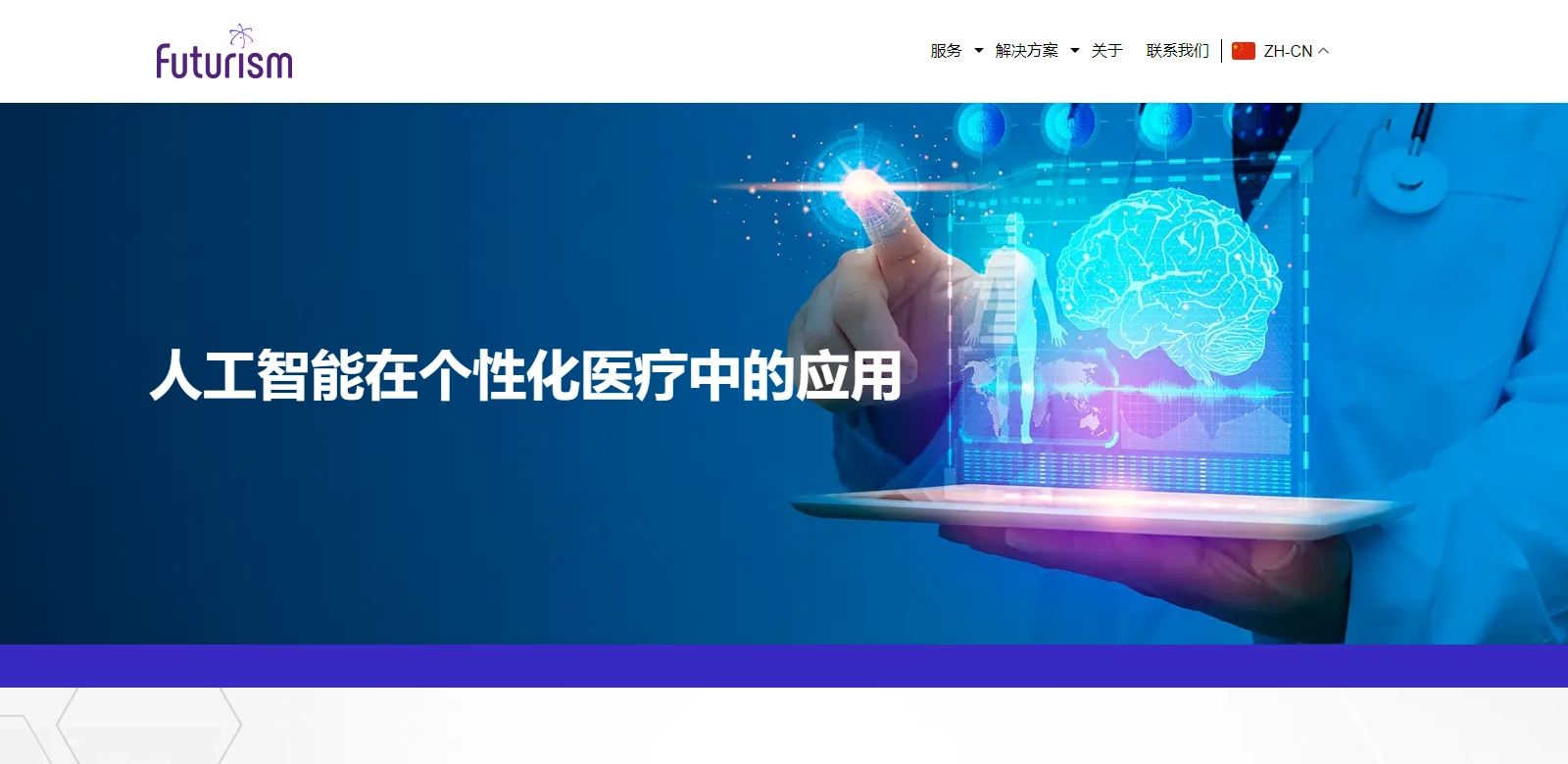
Revolutionizing Healthcare: AI in Personalized Medicine
Futurism AI is at the forefront of a healthcare revolution, leveraging artificial intelligence (AI) to craft personalized medicine solutions that redefine patient care. The integration of AI into healthcare systems promises to enhance the capability of medical practitioners by providing them with the tools necessary to create individualized treatment plans. This innovation not only optimizes patient outcomes but also drives the future of medicine toward a more targeted approach. By employing advanced algorithms and data analytics, healthcare professionals can address patients' unique health profiles, ultimately leading to more effective and tailored treatment strategies. Through the use of AI in personalized medicine, Futurism AI is not just navigating the nuances of patient care but is reshaping how we approach health management as a whole.
Customers of Futurism AI
The effectiveness of personalized medicine is magnified by understanding the diverse clientele that can benefit from such innovations. Futurism AI caters to various customer segments, each requiring a tailored approach to healthcare. Here is an analysis of key customer profiles:
-
Clinicians and Healthcare Practitioners:
Clinicians are constantly seeking ways to improve the accuracy and effectiveness of their treatment plans. By integrating AI-driven personalized medicine solutions, they can analyze large datasets to predict responses to specific therapies. This not only enhances their ability to treat patients but also builds patient trust and satisfaction through improved outcomes. -
Patients with Chronic Conditions:
Individuals suffering from chronic illnesses such as diabetes or heart disease often require ongoing treatment adjustments. AI's role in generating personalized treatment plans based on real-time data helps these patients manage their conditions more effectively, leading to fewer complications. -
Pharmaceutical Companies:
Companies in the pharmaceutical sector can utilize AI insights to streamline drug development processes. By understanding patient-specific responses to medication, these companies can lower costs and reduce time to market for new drugs. AI in personalized medicine allows for a more precise identification of drug efficacy and population targeting, improving overall health outcomes. -
Health Insurance Providers:
Insurers are increasingly interested in personalized medicine solutions as they enhance the ability to predict healthcare costs and patient needs. By integrating AI solutions, insurance providers can develop better risk assessments and personalized plans, ultimately fostering a healthier clientele and reducing attrition rates. -
Medical Researchers and Institutions:
Research facilities benefit significantly from personalized medicine via AI as they can analyze extensive data sets to identify unique health trends. This capability accelerates the pace of innovation and discovery in medical science, paving the way for breakthroughs in treatment methodologies.
Problems and Solution by Futurism AI
Problems Futurism AI Found
In the world of healthcare, several persistent issues undermine patient outcomes and increase inefficiencies. These challenges are pressing and necessitate immediate attention from forward-thinking organizations like Futurism AI:
-
Limited Understanding of Individual Patient Needs:
Traditional medicine often adopts a one-size-fits-all approach, overlooking the unique aspects of each patient's individual history and conditions, which can lead to suboptimal treatment outcomes. -
Inefficient Data Utilization:
Many healthcare practitioners struggle to make optimal use of the immense amounts of patient data available, resulting in missed opportunities for personalized care and predictive treatment. -
Lack of Real-Time Data Access:
Healthcare providers frequently rely on historical data without real-time insights, potentially impeding timely adjustments to patient care and leading to adverse health outcomes. -
High Cost of Treatment:
Traditional treatment plans often result in trial-and-error approaches that can incur additional costs for both patients and healthcare systems. -
Risk of Misdiagnosis:
Without advanced analytics, the healthcare system risks overlooking the finer details in patient data leading to diagnostic errors and inappropriate treatment pathways.
Solution by Futurism AI
Futurism AI addresses these issues holistically. By incorporating AI into personalized medicine, they devise innovative solutions that mitigate these long-standing problems:
The deployment of advanced algorithms facilitates the analysis of vast healthcare data sets, allowing practitioners to decipher patient-specific needs effectively. This advancement ensures accurate diagnosis and curative methodologies, making treatments not only precise but also patient-centric. Futurism AI's dynamic platform enables real-time data access, thereby allowing healthcare professionals to tweak treatment plans instantaneously depending on how the patient is responding to care. This level of agility significantly reduces healthcare costs associated with prolonged treatment phases and trial-and-error methodologies.
Through its unique offerings, Futurism AI introduces a comprehensive framework where patient data analytics transform healthcare delivery. The convergence of AI capabilities with personalized strategies invariably raises the standard of care delivered, fostering a culture of proactive health management and preventative care within the healthcare ecosystem.
Use Case
Futurism AI's solutions have wide-ranging applications, which can be illustrated through several use cases:
-
** Personalized Cancer Treatment Plans**:
AI enables oncologists to tailor chemotherapy and radiation treatments based on a patient's genetic makeup and tumor characteristics, improving survival rates and quality of life. -
Chronic Disease Management:
Patients with conditions like hypertension can receive tailored medication regimens and lifestyle recommendations by analyzing their unique health patterns and responses to previous treatments. -
Post-Surgical Recovery Plans:
AI can assist surgeons in devising recovery protocols customized to optimize healing based on individual patient profiles, leading to better outcomes and shorter recovery times. -
Preventative Health Strategies:
By identifying at-risk populations through predictive modeling, healthcare providers can develop proactive measures to prevent the onset of diseases before they occur, promoting public health.
Top Features of Futurism AI
Futurism AI integrates an array of innovative features designed to bolster their contributions to personalized medicine:
-
Data-Driven Insights:
Utilizing robust analytics to glean actionable insights from large volumes of patient data for informed decision-making. -
Real-Time Monitoring:
Facilitating continual tracking of patients' health metrics enables timely adjustments in treatment protocols. -
Customized Treatment Plans:
Empowering healthcare practitioners to create personalized and adaptive treatment strategies tailored to each patient's unique profile. -
Predictive Analytics:
Leveraging historical data to predict outcomes and refine treatment efficacy, reducing costs and enhancing patient care. -
Interoperability:
Ensuring seamless integration with existing healthcare systems, allowing for holistic approaches and comprehensive patient care solutions.
Frequently Asked Questions with Futurism AI
1. How does AI improve personalized medicine?
Futurism AI harnesses advanced algorithms that analyze extensive patient data sets, generating tailored treatment protocols that consider individual health profiles. This data-driven approach enables healthcare providers to deliver optimal care based on predictive outcomes rather than generic treatments.
2. What are the benefits of using personalized medicine?
Personalized medicine facilitates a more focused treatment strategy that accounts for unique patient characteristics, which significantly enhances treatment efficacy, minimizes adverse effects, and optimizes health outcomes. This patient-centric approach is transforming the landscape of healthcare toward precision and efficacy.
3. Can AI applications predict future health risks?
Yes, Futurism AI utilizes predictive analytics to assess patient data, identifying potential health risks before they manifest. By acting on these insights, healthcare providers can implement preventive measures to mitigate risks and improve overall public health trends.
4. How does Futurism AI ensure patient data privacy?
Futurism AI adheres to established industry standards for data security and privacy, implementing robust protocols to safeguard the confidentiality and integrity of patient information throughout the data analysis process.
5. Is personalized medicine cost-effective?
While initial investment in personalized medicine technologies may appear substantial, the long-term benefits —including improved health outcomes and reduced trial-and-error in treatments—significantly enhance cost-efficiency for both patients and healthcare systems.