
A Human Guide to Project Profitability & Cost Tracking Software
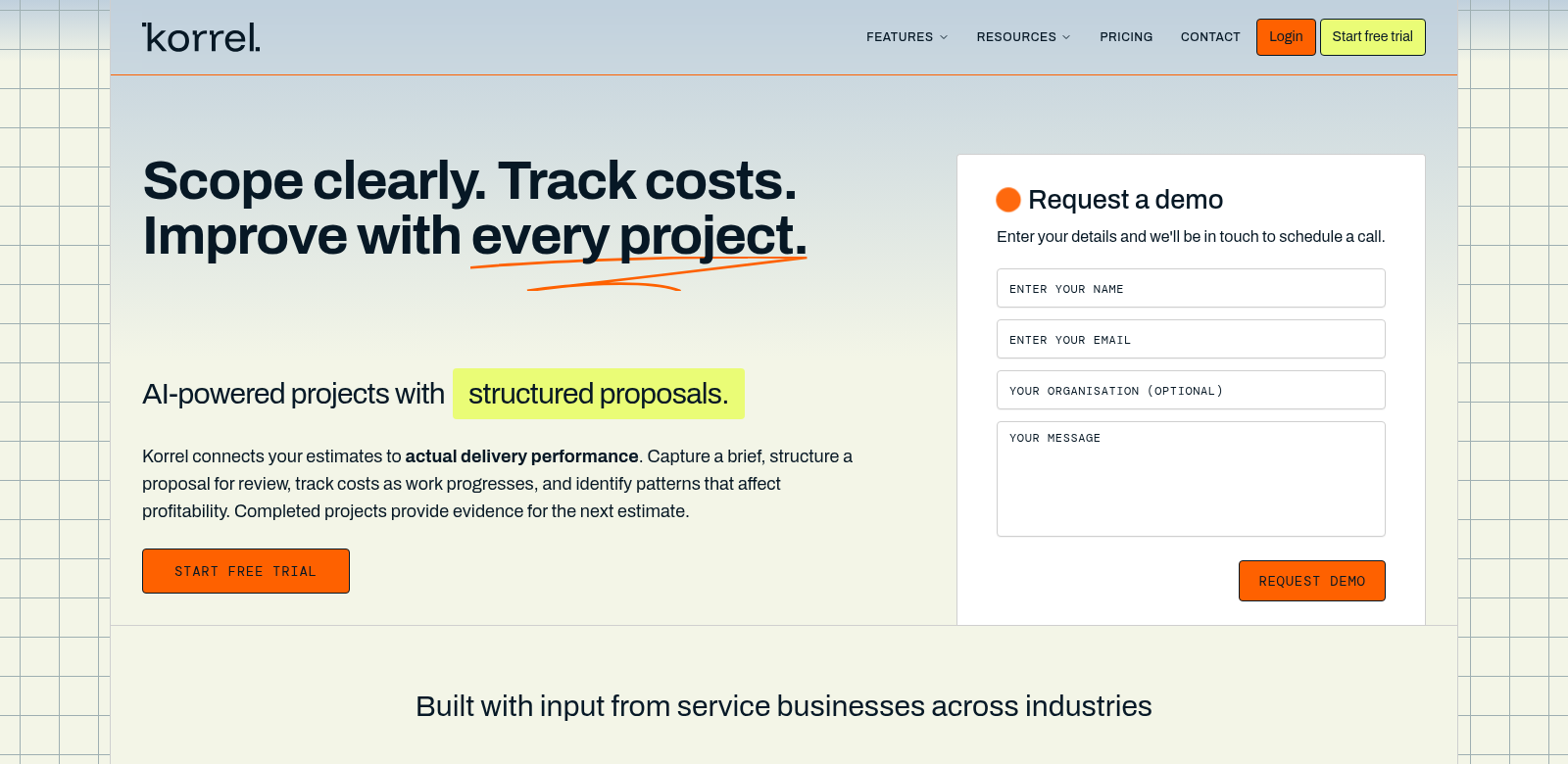
If you're running a business, you know how crucial it is to keep a tight grip on project profitability and costs. That's where a system like Korrel comes in. It's designed to help you do just that, with features that make it easier to write clear proposals, track spending against what you estimated, handle scope changes, and review finished work. Project managers and financial analysts will find it a huge help.
Who Uses Korrel?
Who uses Korrel? All sorts of people, really. But here are some of the main folks who get a lot out of it:
-
Project Managers: Project managers use Korrel to keep projects on budget and on time. It helps them write detailed proposals that show exactly what a project will cost, which means better control over the scope and smarter decisions.
-
Financial Analysts: Financial analysts rely on Korrel to track and analyze project costs against their original estimates. They can spot problems early, make budget changes fast, and ultimately boost the project's profit.
-
Small Business Owners: Small business owners love Korrel because it's easy to use but still powerful. They can juggle lots of projects and keep a close eye on their money. Plus, writing clear proposals means clients know what to expect, and that makes everyone happier.
-
Consultants: Consultants use Korrel to handle client projects and see exactly how profitable each one is. The tracking features show them all the costs, which helps them deliver great work and get more business.
-
Construction Firms: Construction projects often go over budget. Korrel helps these firms get their budgets right and finish jobs successfully. Its cost tracking features mean they can control spending and make more money on every project.
Problems Korrel Solves
Every business, no matter the industry, can struggle with project costs. Korrel steps in with a set of tools built to fix those exact problems.
Problems Korrel Found
-
Budget Overruns: Projects frequently blow past their original budget, which cuts into profits and stresses out companies.
-
Messy Proposals: Writing good proposals can be a pain. It often leads to clients misunderstanding things and the project scope creeping out of control.
-
Bad Cost Tracking: If you don't track costs accurately, you can't tell where your money's going. That makes financial planning and decisions a nightmare.
-
Poor Change Management: When scope changes aren't handled well, they can completely throw off project timelines and budgets. That's a headache for everyone involved.
-
Missing Documentation: Without good records of finished work, it's tough to figure out how a project really went or to explain why money was spent.
Solutions by Korrel
Korrel tackles these problems head-on, making sure things run smoothly and effectively from start to finish.
It makes budgets more accurate. Project managers can set clear estimates and then track spending as it happens. This means they catch budget overruns before they become a huge problem. Korrel also helps them write proposals that clearly spell out what to expect, cutting down on misunderstandings with everyone involved.
Its strong cost tracking tools let users easily see exactly where their money goes. This leads to smarter financial decisions, better project results, and even helps with planning future work.
And when the scope changes, Korrel handles it well, keeping timelines on track. It gives you a clear way to document those changes, so everyone stays in the loop and projects keep moving forward without a hitch.
Finally, Korrel makes documentation a priority. Companies can keep detailed records of everything from finished projects. This transparency means better accountability and helps them really understand how projects performed and how profitable they were. It gives businesses the insights they need to do even better next time.
Use Case
Imagine a mid-sized construction company. They're always dealing with shifting project scopes and tight budgets. With Korrel, they can write precise estimates and proposals that already factor in possible changes. As the job moves along, they track actual costs against those estimates, in real-time. This lets them make quick adjustments, keeping the project on budget. Plus, their project managers can document all the finished work, which backs up their financial reports and helps them land more contracts.
Top Features of Korrel
Korrel stands out because of its features, all built to make project management easier. Here are some of the best:
-
Structured Proposals: Write detailed proposals quickly. They'll clearly lay out costs, what to expect, and timelines for everyone.
-
Real-time Cost Tracking: Watch project spending against your estimates as it happens, so projects stay on budget.
-
Scope Change Management: Handle project scope changes smoothly, cutting down on delays and budget problems.
-
Strong Documentation Tools: Keep detailed records of finished work and all decisions made during a project. This makes everything transparent.
-
Clear Reporting: Create smart reports for everyone involved. They'll summarize how the project performed and its financial health, helping you plan for what's next.
Frequently Asked Questions with Korrel
-
How does Korrel help with project budgeting? Korrel gives you the tools to build accurate project budgets and then track actual spending against them, live. This helps you catch and fix budget overruns before they get out of hand.
-
Is Korrel good for small businesses? Yes, definitely! It's easy to use and has flexible pricing, making it a perfect fit for small businesses who want to get better at managing projects and making more money.
-
Can Korrel handle multiple projects at once? Yep, it's built for that. You can easily jump between ongoing projects and keep tabs on all their finances and deadlines.
-
Does Korrel offer customer support? Yes, we have strong customer support. So if you run into any challenges or have questions about how the software works, help is always there.
-
What industries can use Korrel? Korrel is pretty flexible. It works well for lots of industries, like construction, consulting, and really, any field that needs to manage projects and track costs.