
AI Manuscript Review Before You Submit
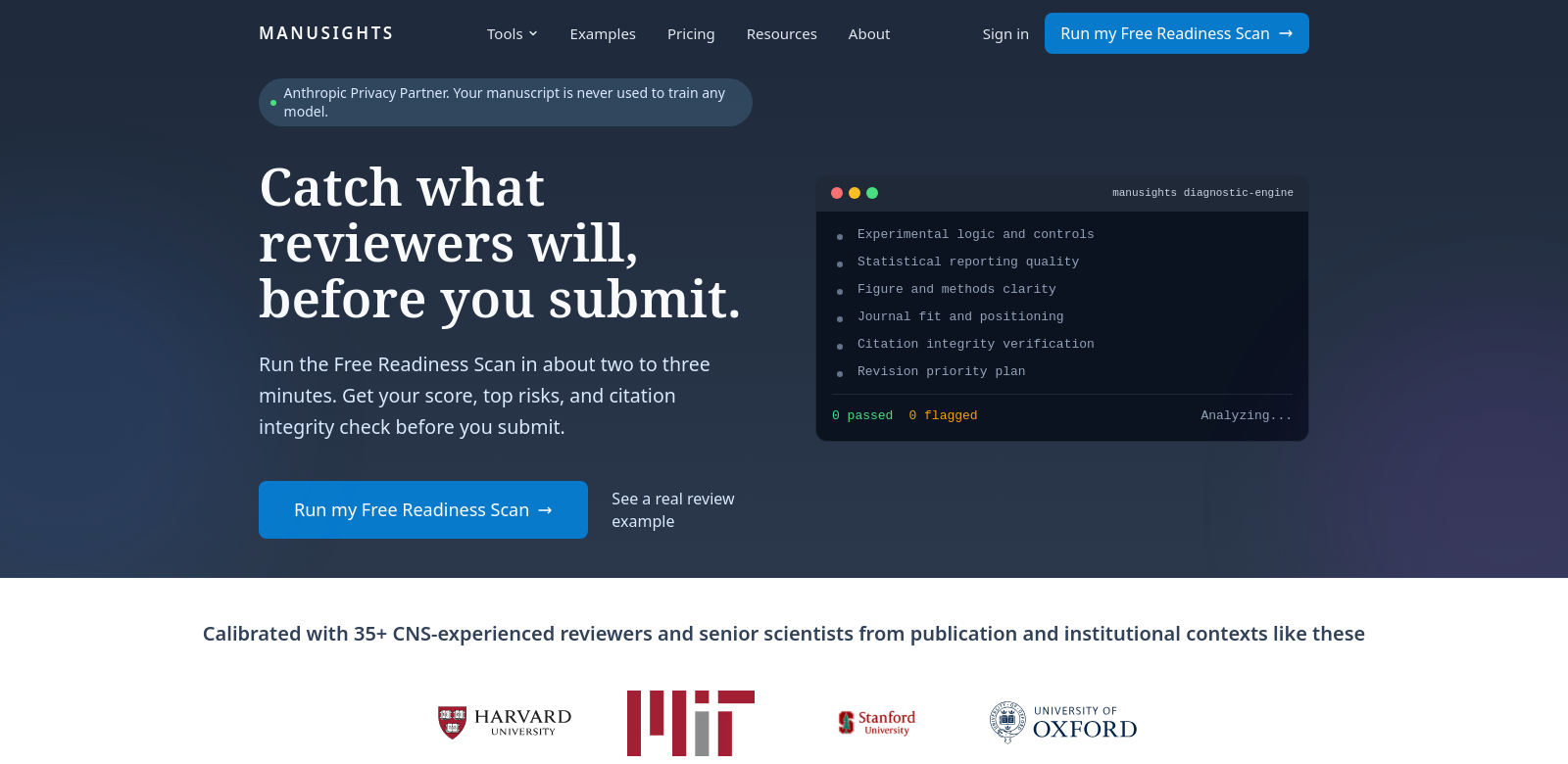
AI is changing many fields, and academic publishing is one of them. With more pressure to publish, quality is more important than ever. Manusights is an AI tool that helps authors get their manuscripts ready for peer review. It gives detailed feedback on things like your methods, how you present your arguments, citations, figures, and if the journal is a good fit. Using it can really boost your chances of getting accepted into good journals, offering a deeper check than just proofreading.
Who Uses Manusights?
Many different people involved in research and publishing use Manusights. Here are some of them:
-
Academic Researchers: Researchers often work on complex topics. Manusights helps them make sure their methods meet academic standards. The AI reviews their work, giving insights that make their writing clearer and stronger, so their research has more impact.
-
Graduate Students: Publishing can be daunting for new graduate students. Manusights helps them ensure their papers meet what their advisors and reviewers expect. This process builds confidence, letting them focus on their research instead of worrying about submission.
-
Established Scholars: Even experienced authors can benefit from a fresh look at their work. Manusights offers an objective assessment that might catch things they missed. It also helps ensure their work stays relevant and impactful, especially in fast-moving fields.
-
Research Institutions: Institutions invest a lot in research and want good results. By using Manusights, they can encourage high-quality work from their scholars, making their collective output stronger and boosting the institution's reputation.
-
Publishers: Publishers want quality submissions to maintain their standards. By suggesting authors use Manusights, publishers can speed up the review process and reduce how many revisions are needed after submission, helping good manuscripts get published faster.
Problems Manusights Solves
Getting a manuscript from idea to publication has many hurdles. Manusights helps clear these hurdles.
Common Problems
-
Quality: Many authors struggle to make their manuscripts clear and coherent. Poor feedback before submission often leads to rejections, wasting time and effort.
-
Lack of Experience: New researchers often don't know how to structure their papers to meet academic standards, leading to weak arguments.
-
Formatting: Dealing with different journal formatting rules can be tough, and mistakes often cause delays.
-
Citations: Authors might accidentally miss citations, which can lead to plagiarism issues or not giving proper credit.
-
Confusing Feedback: Reviewers' comments on drafts can vary a lot, making it hard to know how to revise.
How Manusights Helps
Manusights tackles these problems with smart AI solutions that refine manuscripts before you submit them:
First, it does a quality check, looking at how coherent and logical your document is against peer-review standards. By pointing out areas that need work, it helps authors meet academic expectations.
Second, with its methodological review, Manusights helps users structure their arguments clearly and persuasively. This support helps authors make their findings stand out.
It also makes formatting easier by providing templates and guidelines for specific journals. Plus, with its citation tools, authors get feedback on accuracy, reducing problems with referencing.
Finally, by giving clear, consolidated feedback, Manusights reduces the stress of dealing with conflicting comments from multiple reviewers, making revisions simpler.
A Use Case
Imagine a researcher with an important manuscript ready. They run their draft through Manusights. The system flags structural problems, method inconsistencies, and citation errors. With this feedback, the researcher revises the manuscript, making it much clearer. After these improvements, they submit the paper, and it gets accepted with only minor revisions.
Top Features
Manusights has several features designed to improve academic manuscripts:
-
Full Reviews: The tool gives in-depth assessments of different parts of your manuscript, covering everything.
-
Methodology Guidance: Manusights offers expert advice on improving your methods, giving authors confidence in their research.
-
Formatting Help: This feature simplifies formatting, helping avoid delays.
-
Citation Tools: AI-powered checks ensure accurate citations and proper credit.
-
Easy-to-Use Interface: The platform is simple to use for everyone, whether you're tech-savvy or not.
Frequently Asked Questions
-
How accurate is Manusights' feedback? Manusights uses advanced AI trained on huge datasets, mimicking real peer reviews. By learning from past submissions, it gives consistent and relevant feedback, helping authors significantly improve their manuscripts.
-
Does Manusights work for all academic fields? Yes, Manusights is built to handle many disciplines. Its adaptable AI works for various fields, from science to humanities or social sciences, supporting research across the board.
-
Can Manusights help with non-English manuscripts? Right now, Manusights mainly works in English. But we plan to expand its capabilities to other languages in the future, aiming for more inclusive academic publishing.
-
What kind of feedback will I get? Authors can expect practical insights on content structure, clarity, originality, and journal fit. The feedback is thorough and helpful, guiding authors on what to revise to improve their submissions.
-
Is there a limit on submissions? You can submit multiple manuscripts. However, we deliver comprehensive feedback on each one sequentially. This ensures each manuscript gets thorough, focused attention for the best results.
What makes the below so obviously AI generated?
- The language is still quite formal and uses many "AI vocabulary" words (e.g., "paramount," "multifaceted," "mitigate," "ascertain," "fostering," "optimal," "robust," "streamline," "amplify," "reassuring," "holistic," "empowering," "comprehensive," "consistency and relevance," "adaptable algorithms," "inclusivity," "sequential," "undivided attention").
- Sentence structures, while varied, often lean towards complex and slightly verbose, trying to cover all bases.
- The tone remains consistently promotional and slightly detached, lacking a more direct, human touch or occasional conversational phrasing.
- The "Problems" and "Solutions" sections, while rephrased, still follow a very structured, almost list-like pattern that feels generated.
- The FAQ answers are still quite polished and use formal phrasing common in AI-generated responses.
Now make it not obviously AI generated.
AI Manuscript Review Before You Submit
AI is changing a lot of industries, and academic publishing is one of them. With more pressure to publish, quality matters more than ever. Manusights is an AI tool that helps authors get their manuscripts ready for peer review. It gives detailed feedback on things like your methods, how you present your arguments, citations, figures, and if the journal is a good fit. Using it can really boost your chances of getting accepted into good journals, offering a deeper check than just proofreading.
Who Uses Manusights?
Lots of different people involved in research and publishing use Manusights. Here are some of them:
-
Academic Researchers: Researchers often work on complex topics. Manusights helps them make sure their methods meet academic standards. The AI reviews their work, giving insights that make their writing clearer and stronger, so their research has more impact.
-
Graduate Students: Publishing can be daunting for new graduate students. Manusights helps them ensure their papers meet what their advisors and reviewers expect. This process builds confidence, letting them focus on their research instead of worrying about submission.
-
Established Scholars: Even experienced authors can benefit from a fresh look at their work. Manusights offers an objective assessment that might catch things they missed. It also helps ensure their work stays relevant and impactful, especially in fast-moving fields.
-
Research Institutions: Institutions invest a lot in research and want good results. By using Manusights, they can encourage high-quality work from their scholars, making their collective output stronger and boosting the institution's reputation.
-
Publishers: Publishers want quality submissions to maintain their standards. By suggesting authors use Manusights, publishers can speed up the review process and reduce how many revisions are needed after submission, helping good manuscripts get published faster.
Problems Manusights Solves
Getting a manuscript from idea to publication has many hurdles. Manusights helps clear these hurdles.
Common Problems
-
Quality: Many authors struggle to make their manuscripts clear and coherent. Poor feedback before submission often leads to rejections, wasting time and effort.
-
Lack of Experience: New researchers often don't know how to structure their papers to meet academic standards, leading to weak arguments.
-
Formatting: Dealing with different journal formatting rules can be tough, and mistakes often cause delays.
-
Citations: Authors might accidentally miss citations, which can lead to plagiarism issues or not giving proper credit.
-
Confusing Feedback: Reviewers' comments on drafts can vary a lot, making it hard to know how to revise.
How Manusights Helps
Manusights tackles these problems with smart AI solutions that refine manuscripts before you submit them:
First, it does a quality check, looking at how coherent and logical your document is against peer-review standards. By pointing out areas that need work, it helps authors meet academic expectations.
Second, with its methodological review, Manusights helps users structure their arguments clearly and persuasively. This support helps authors make their findings stand out.
It also makes formatting easier by providing templates and guidelines for specific journals. Plus, with its citation tools, authors get feedback on accuracy, reducing problems with referencing.
Finally, by giving clear, consolidated feedback, Manusights reduces the stress of dealing with conflicting comments from multiple reviewers, making revisions simpler.
A Use Case
Imagine a researcher with an important manuscript ready. They run their draft through Manusights. The system flags structural problems, method inconsistencies, and citation errors. With this feedback, the researcher revises the manuscript, making it much clearer. After these improvements, they submit the paper, and it gets accepted with only minor revisions.
Top Features
Manusights has several features designed to improve academic manuscripts:
-
Full Reviews: The tool gives in-depth assessments of different parts of your manuscript, covering everything.
-
Methodology Guidance: Manusights offers expert advice on improving your methods, giving authors confidence in their research.
-
Formatting Help: This feature simplifies formatting, helping avoid delays.
-
Citation Tools: AI-powered checks ensure accurate citations and proper credit.
-
Easy-to-Use Interface: The platform is simple to use for everyone, whether you're tech-savvy or not.
Frequently Asked Questions
-
How accurate is Manusights' feedback? Manusights uses advanced AI trained on huge datasets, mimicking real peer reviews. By learning from past submissions, it gives consistent and relevant feedback, helping authors significantly improve their manuscripts.
-
Does Manusights work for all academic fields? Yes, Manusights is built to handle many disciplines. Its adaptable AI works for various fields,